
Why Vapor Wake Demands A Different Kind of Training
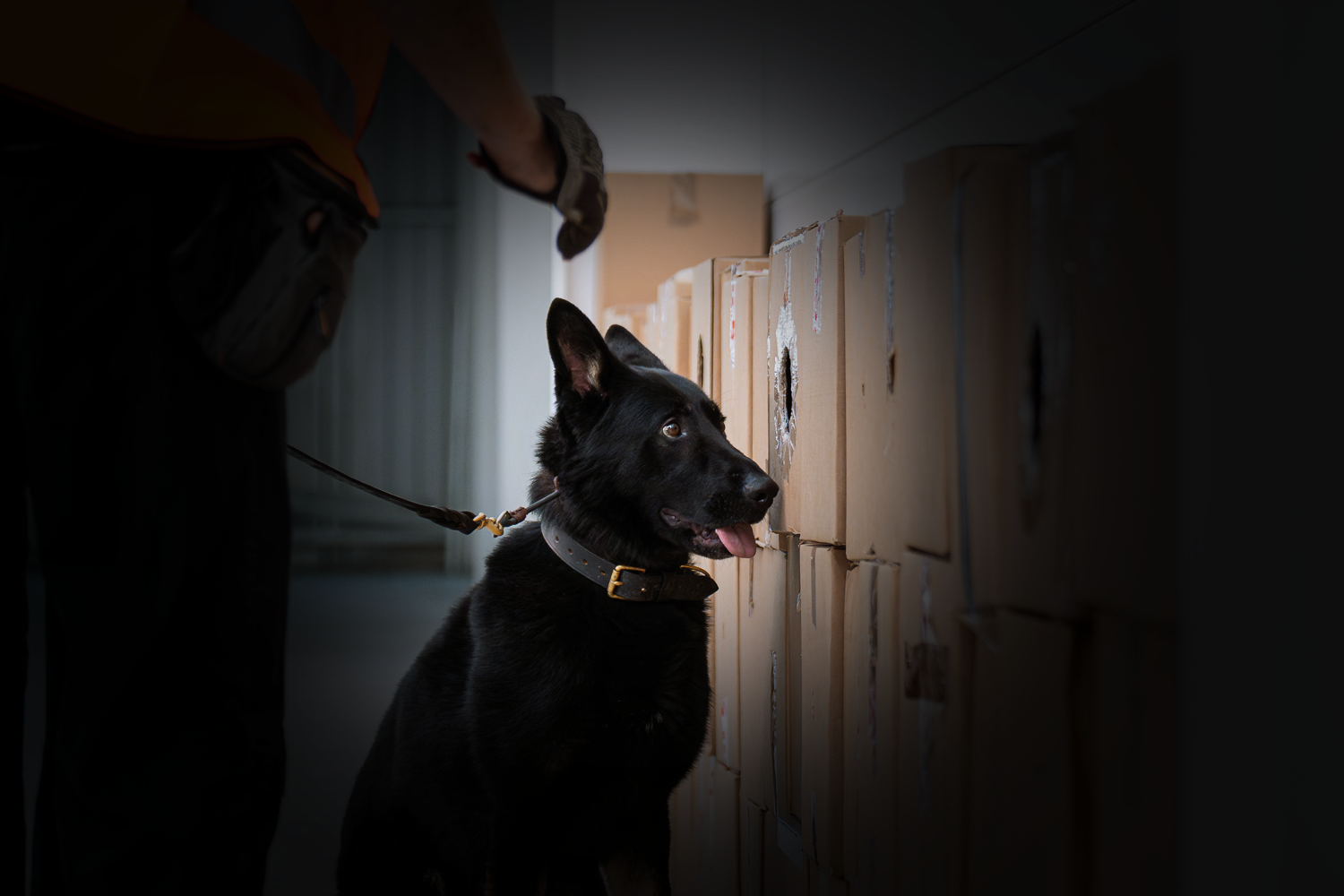
In the evolving landscape of counterterrorism and public safety, canine detection teams remain one of the most reliable, mobile, and versatile security tools available. Among the various detection modalities, Vapor Wake® is a highly specialized technique that addresses a unique and pressing threat: the movement of concealed explosives on individuals in crowded public spaces. While traditional explosive detection dogs (EDDs) are trained to detect stationary threats, Vapor Wake dogs are uniquely conditioned to follow a moving person's scent trail or "vapor wake” of explosives. This capability represents a significant advancement in threat detection but also requires a fundamentally different approach to training, deployment, and handler integration.
Understanding why Vapor Wake requires different training begins with a closer examination of the science and strategy behind this innovation.
The Science Behind Vapor Wake Detection
Vapor Wake detection is built upon fluid dynamics principles and olfactory science. As a person moves through a space, their body heat and natural motion create a thermal plume that rises and trails behind them. If that person carries explosive materials, microscopic particles and vapors from those materials can enter this wake, forming an airborne trace. Vapor Wake canines are trained to detect these invisible trails and follow them back to the source, without requiring direct contact with the person or their belongings.
This form of dynamic tracking adds a critical layer of proactive threat detection, particularly in high-traffic environments such as airports, sports venues, transit hubs, and public gatherings. However, the science behind Vapor Wake also presents unique challenges that conventional detection training cannot address.
A Purpose-Bred Solution
The first significant distinction is the canine itself. Vapor Wake detection is not a skill that can be taught to any dog. These dogs are typically purpose-bred from specific bloodlines known for intelligence, stamina, olfactory sensitivity, and composure in high-stress environments. Breeds such as Labrador Retrievers are commonly selected for their steady temperament, sociability, and ability to work for extended periods without fatigue or distraction.
Puppies intended for Vapor Wake work are evaluated from birth using scientifically validated assessments to determine suitability. Only a small percentage possess the whole combination of traits needed to perform at the highest levels in this demanding role. This upfront selectivity sets the foundation for everything that follows, and it is only the beginning.
Training for a Moving Threat
Traditional explosive detection dog training focuses on imprinting a dog to recognize the odor of specific explosive compounds and alert when the source is located. While effective, this model is built around static scenarios, such as unattended bags, hidden caches, or staged perimeter sweeps.
Vapor Wake training, by contrast, introduces motion as a central variable. Dogs are trained not only to detect explosive odors in the environment but also to recognize and pursue the residual trail left by a moving individual, often in crowded, noisy, or chaotic environments. This requires a deep sensory focus, high motivation, and the cognitive ability to filter out distractions.
The training progression is more complex and longer in duration. Dogs must first learn to follow odor plumes in controlled conditions before being gradually introduced to more dynamic, real-world scenarios. Crowd simulation, environmental variability, and human decoys are all incorporated to build the canine’s capacity to perform in operational settings. A single alert does not measure success, but rather the ability to navigate ambiguity, make decisions in motion, and communicate effectively with their handler while working off-leash in many cases.
The Role of the Handler
Equally critical to the equation is the Vapor Wake handler. Unlike traditional EDD operations, where the handler guides the dog through a predefined search pattern, Vapor Wake work is often dog-led. The canine determines the direction of pursuit, and the handler must learn to interpret subtle cues, maintain control in unpredictable environments, and support the dog’s independence without interfering with its process.
This dynamic also demands advanced training for humans. Vapor Wake handlers undergo specialized instruction, including reading canine behavior, understanding odor dynamics, and managing team movement through congested areas. Situational awareness, decision-making under pressure, and interagency communication are essential components of effective performance.
Handler turnover in these programs is costly, not just in financial terms but in operational readiness. Critical in any detection work, the handler-dog bond is especially vital in Vapor Wake. Disrupting that relationship can diminish the team’s effectiveness for weeks or months.
Deployment Considerations
Vapor Wake is not a one-size-fits-all solution. A high-value asset is best used where the threat profile justifies the investment. Airports, transit systems, and significant events benefit significantly from the ability to detect moving threats without disrupting the flow of pedestrian traffic.
However, deploying Vapor Wake teams effectively requires planning and integration. These dogs should not be positioned as static deterrents or used interchangeably with conventional EDDs. Instead, they are force multipliers capable of screening high volumes of people in motion while also providing law enforcement and security teams with actionable intelligence based on real-time alerts.
Commanders and security planners must understand the distinction in capability and develop deployment strategies accordingly. Vapor Wake is not just about increasing visibility; it is about enhancing interdiction at the point of maximum exposure.
Raising the Standard
Vapor Wake detection reflects a broader shift in the security industry, from a reactive posture to a proactive strategy. As threats evolve, so too must the tools we use to counter them. This is not a repudiation of traditional EDD methods, but rather a recognition that new threats demand new answers.
Training for Vapor Wake is not simply more of the same; it is a reinvention of the detection paradigm. From the breeding program to the handler academy, from the training scenarios to the operational doctrine, every element is tailored to the unique demands of tracking a moving, hidden threat through dense populations.
At GK9, we take pride in being at the forefront of this evolution. Our certified Vapor Wake teams are the result of years of investment in research, development, and operational fielding. They represent the next generation of explosive detection, smarter, faster, and more adaptive to today’s dynamic threats.
Final Thoughts
Security is never static. The threats we face are mobile, unpredictable, and often disguised in plain sight. Vapor Wake detection answers that challenge, but only when properly understood, trained, and deployed.
It demands more from the dog—more from the handler. And more from the organization, fielding the capability.
At GK9, we meet that challenge head-on because excellence in detection isn’t optional. It’s operationally essential.